Welcome to the Grassroots
Grassroots isn't a test of how much soccer you know. It's an introduction to how children learn — taught the same way you'll be teaching your players.
The Notepad: The Tool That's For You
Six of the tools in the box are for coaching them. This one is for coaching you.
Examples: Show Them — But Show Them the Right Person
A clip of a Champions League midfielder is worth nothing to a nine-year-old who doesn't know who he is.
The Tactics Board: Put It in Their Hands
The board was never much use while I was holding it. It got good when they took it off me.
Coaching in the Flow: Record Yourself. You Won't Enjoy It.
I recorded half a game and counted the names. Two players got said more than all the others put together — the best one, and the one having the hardest time.
Hot and Cold Feedback
Ask a player why they did something and most of the time you'll get "I don't know." That isn't the player failing. That's the question.
One-to-One Coaching: Give a Player Their Own Game
"Be more involved" isn't a challenge. It's a wish. Give a player a number and something to aim at, and watch what changes.
Real Coaching Problems
The course teaches you the ideal session. Then you turn up and your own kid is on the team.
Formats and Formations
9v9 isn't 7v7 with two more players. Every step up changes which problems your team has to solve.
Designing a Session
Most coaches don't plan a session. They plan ninety minutes of activities and hope a session breaks out.

Welcome to the Grassroots
Grassroots isn't a test of how much soccer you know. It's an introduction to how children learn — taught the same way you'll be teaching your players.

Experiential Learning
Play-Practice-Play is built on experiential learning. Here's what that actually means, the four stages of the cycle, and the four ways coaches break it.
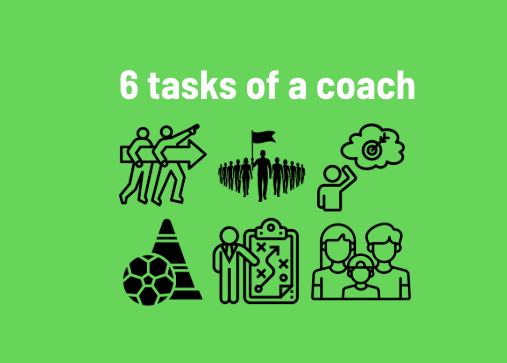
6 Tasks of a Coach
Behind every great session is a great coach — one who understands their six essential tasks. In this piece, Lee Dunne breaks down the framework that defines effective coaching, from organization and observation to reflection and leadership, helping you plan with purpose and coach with clarity.
The Coaches Toolbox
Great players are built in small spaces. In this article, Lee Dunne shares how players can use at-home technical training to sharpen touch, improve control, and build confidence. With a ball, and consistent effort, every player can keep developing — anywhere.
5 Elements of a Training Activity
Every great soccer session has structure — but there are five essential elements of effective training: Organization, Game-Like Design, Repetition, Challenge, and Coaching. Learn how to plan purposeful practices that mirror real match demands, stretch your players’ thinking, and create meaningful development.
The Build Out Line and Rule
It’s a tough one. Can be an advantage. Is fake and frustrating.
Technical Training at Home
Great players are built in small spaces. In this article, Lee Dunne shares how players can use at-home technical training to sharpen touch, improve control, and build confidence. With a ball, a few cones, and consistent effort, every player can keep developing — anywhere.
Constraints, and CLA
The best coaching doesn’t control players — it guides them. In this article, Lee Dunne explains how the Constraints-Led Approach (CLA) helps coaches design environments that challenge players to perceive, decide, and act more effectively through real game situations.
Coaching Your Child in a Team
It can be hard. It can be amazing. Either way, it is definitely hard work, but the game only grows with your effort.